
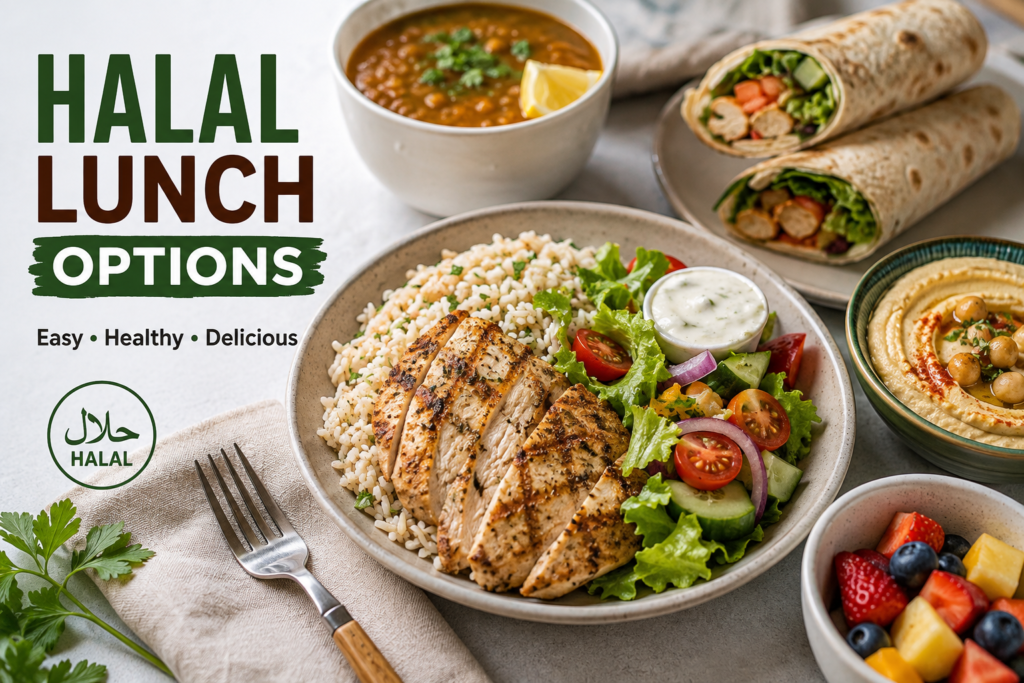
Choosing lunch should be simple, but finding meals that fit halal dietary requirements can sometimes make an ordinary decision more complicated. You may be preparing lunch for work, packing something for school, looking for a quick meal during a busy day, or trying to find suitable options at a restaurant.
The good news is that halal lunch options are much broader than a single type of cuisine. You can build satisfying lunches around rice, vegetables, legumes, seafood, eggs, dairy, and properly sourced halal meat. The key is understanding ingredients, preparation and when eating outside the home how the food is handled.
Halal food is not simply a label applied to meat. Codex guidelines describe halal food as food permitted under Islamic law and address not only ingredients but also preparation, processing, transportation, storage, and contact with prohibited substances.
That makes ingredient awareness particularly important.
This guide covers practical halal lunch ideas, balanced meal combinations, restaurant considerations, work and school lunches, and common mistakes to avoid.
What Makes a Lunch Halal?
A halal lunch contains ingredients and preparation methods that comply with Islamic dietary requirements.
For someone choosing lunch, that can mean considering:
- The source of meat
- Alcohol-containing ingredients
- Pork and pork-derived ingredients
- Food preparation practices
- Sauces and marinades
- Cross-contact concerns
- Halal certification where relevant
Not every vegetarian or seafood meal automatically needs the same level of verification, either. Ingredients and preparation still matter.
For packaged foods, checking the ingredient list and any recognized halal certification can provide useful information.
Easy Halal Lunch Options
One of the easiest ways to plan halal lunches is to think in terms of meal components rather than individual recipes.
A balanced lunch can include:
Protein + carbohydrate + vegetables + healthy fat + optional fruit or dairy
For example:
| Protein | Carbohydrate | Vegetables | Extra |
|---|---|---|---|
| Halal chicken | Rice | Cucumber salad | Yogurt |
| Eggs | Whole-grain bread | Tomatoes | Fruit |
| Lentils | Flatbread | Mixed greens | Hummus |
| Fish | Potatoes | Roasted vegetables | Lemon |
| Chickpeas | Quinoa | Spinach | Tahini |
This approach gives you dozens of combinations without requiring a completely different recipe every day.
Halal Lunch Ideas for Work
Work lunches need to satisfy three requirements: they should be easy to transport, reasonably filling, and practical to eat.
Chicken and Rice Bowl
A chicken and rice bowl is one of the easiest meal-prep combinations.
You can combine halal chicken with rice, roasted vegetables, cucumber, greens, or a yogurt-based sauce.
Keep sauces separate when possible so the meal stays fresh.
Hummus and Vegetable Wrap
A hummus wrap can be prepared quickly and works well for a lighter lunch.
Try combining:
- Hummus
- Lettuce
- Cucumber
- Tomato
- Bell pepper
- Olives
- Cheese, if desired
Add a protein source if you need a more substantial meal.
Lentil Bowl
Lentils are useful for meal preparation because they provide plant-based protein and pair well with rice, vegetables, and salads.
A simple lentil lunch can also be inexpensive compared with many restaurant meals.
Egg Sandwich
Eggs can make a quick lunch when you have limited preparation time.
Use whole-grain bread, eggs, salad vegetables, and a suitable sauce.
The important consideration is not the egg itself but the other ingredients used in the sandwich.
Healthy Halal Lunch Options
“Halal” and “healthy” describe different things.
A meal can be halal but still be high in calories, sodium, saturated fat, or added sugar. If nutrition matters to you, evaluate the entire meal rather than assuming halal automatically means healthy.
A balanced lunch can emphasize:
- Vegetables
- Whole grains
- Beans and lentils
- Fish
- Lean halal-certified meat
- Fruit
- Unsweetened dairy
- Moderate portions of sauces
You can also improve an existing meal without changing its cultural identity.
For example, instead of removing rice from a meal completely, you might pair a moderate portion with more vegetables and a suitable protein source.
Halal Lunch Options for School
School lunches need to be convenient and appealing enough that children will actually eat them.
Good options include:
- Chicken wraps
- Cheese and vegetable sandwiches
- Egg sandwiches
- Hummus with pita
- Fruit and yogurt
- Pasta with suitable sauce
- Rice bowls
- Vegetable quesadillas using appropriate ingredients
For younger children, consider portion size and food safety.
Cold foods should be kept appropriately chilled, and foods that are difficult for a child to eat independently may be less practical even if nutritionally excellent.
How to Choose Halal Food at Restaurants
Eating at restaurants requires a slightly different approach.
Do not rely solely on a dish’s name.
For example, a menu item may contain:
- Meat
- Stock
- Sauce
- Marinade
- Cheese
- Alcohol-based flavoring
- Processed ingredients
If the restaurant is not clearly halal, ask specific questions.
Questions to Ask
You can ask:
- Is the meat halal-certified?
- Which supplier provides the meat?
- Does the marinade contain alcohol?
- Are sauces made in-house?
- Are there separate preparation procedures?
- Is the restaurant fully halal or does it serve both halal and non-halal food?
The level of verification you need depends on your own dietary requirements and interpretation.
Halal Lunch Options Without Meat
Halal eating does not require meat at every meal.
Plant-based options can include:
- Falafel
- Hummus
- Lentil soup
- Bean bowls
- Vegetable curry
- Chickpea salad
- Grilled vegetables
- Egg-based meals
- Pasta with vegetable sauces
- Rice and lentils
These can also make meal planning easier because you are not dependent on sourcing halal meat for every lunch.
International Halal Lunch Ideas
Halal lunch options exist across many cuisines.
Middle Eastern
- Falafel
- Chicken shawarma
- Hummus
- Fattoush
- Lentil soup
- Rice dishes
South Asian
- Chicken curry
- Chana
- Dal
- Biryani
- Vegetable rice
- Roti with suitable curries
Mediterranean
- Grilled fish
- Rice bowls
- Salads
- Hummus
- Lentils
- Vegetable plates
Turkish
- Grilled meats from halal sources
- Lentil soup
- Rice
- Pide with suitable ingredients
- Meze
East Asian-Inspired
Look carefully at sauces and preparation methods. Soy sauce itself is not automatically problematic, but individual sauces and marinades can contain ingredients that require checking.
How to Build a Five-Day Halal Lunch Plan
Planning ahead can make halal eating considerably easier.
A simple five-day rotation might look like:
Monday: Chicken and rice bowl
Tuesday: Hummus and vegetable wrap
Wednesday: Lentil and quinoa bowl
Thursday: Fish with potatoes and salad
Friday: Egg and vegetable sandwich
The advantage of this approach is flexibility.
You can replace the protein or carbohydrate without redesigning the entire meal.
Common Mistakes When Choosing Halal Lunch
Assuming Vegetarian Automatically Means Halal
Vegetarian food avoids meat, but other ingredients may still require consideration.
Ignoring Sauces
Sauces, marinades, dressings, and stocks can contain ingredients that are not obvious from the dish name.
Forgetting Cross-Contact
For people who require strict halal preparation, kitchen practices can matter as much as ingredients.
Overcomplicating Meal Preparation
You do not need an elaborate recipe every day.
Simple meals built from a few suitable ingredients can be nutritious, affordable, and enjoyable.
Frequently Asked Questions About Halal Lunch Options
What are some easy halal lunch options?
Chicken and rice bowls, hummus wraps, lentil bowls, egg sandwiches, fish with vegetables, falafel, and chickpea salads are all practical starting points. Ingredient and preparation requirements should still be checked according to your dietary standards.
What is a healthy halal lunch?
A healthy halal lunch can combine a suitable protein source, vegetables, whole grains or another carbohydrate, and moderate amounts of healthy fats. Halal status and nutritional quality are separate considerations.
Can vegetarian food be halal?
Vegetarian food can be halal, but vegetarian does not automatically mean halal. Ingredients, sauces, alcohol-derived ingredients, preparation, and cross-contact may still matter.
How do I find halal lunch near me?
Search for halal restaurants, halal-certified restaurants, or restaurants that clearly identify their halal offerings. Check current menus and contact the restaurant when certification or preparation practices are unclear.
What are good halal lunches for work?
Rice bowls, wraps, salads with suitable protein, lentil dishes, pasta, and meal-prepped chicken or fish are practical choices because they can be prepared in advance and transported easily.
Conclusion
The best halal lunch options are not limited to one cuisine or a handful of traditional dishes. Once you understand how to evaluate ingredients and preparation, you can create everything from quick wraps and rice bowls to healthy salads, lentil meals, and restaurant lunches.
For packaged or restaurant food, pay particular attention to meat sourcing, sauces, marinades, and preparation practices. When you are unsure, asking a specific question is better than assuming.
The easiest long-term strategy is to build a flexible meal rotation around foods you already enjoy. That makes halal lunch planning less restrictive, more affordable, and much easier to maintain.