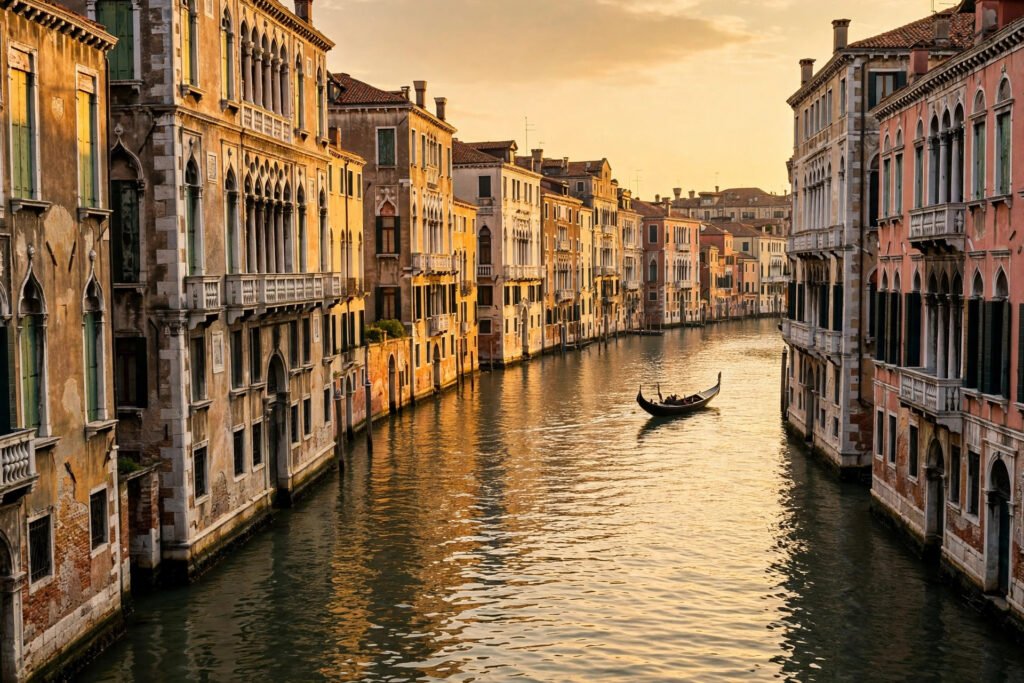
Buying a home in Venice, Italy is a dream for many travelers who fall in love with the canals, the warm evening light, and the quiet rhythm of a city built on water. Whether you are looking for a full-time residence, a second home, or an investment property, Venice offers something no other city on earth can match.
Still, learning what to know before buying a home in Venice Italy matters far more than the photos on a listing ever suggest. The Italian legal process, the age of the building stock, the city relationship with water, and the everyday logistics of a place with no roads all shape what ownership really feels like. This guide explains what to know before buying a home in Venice Italy, step by step, so you can search with confidence.
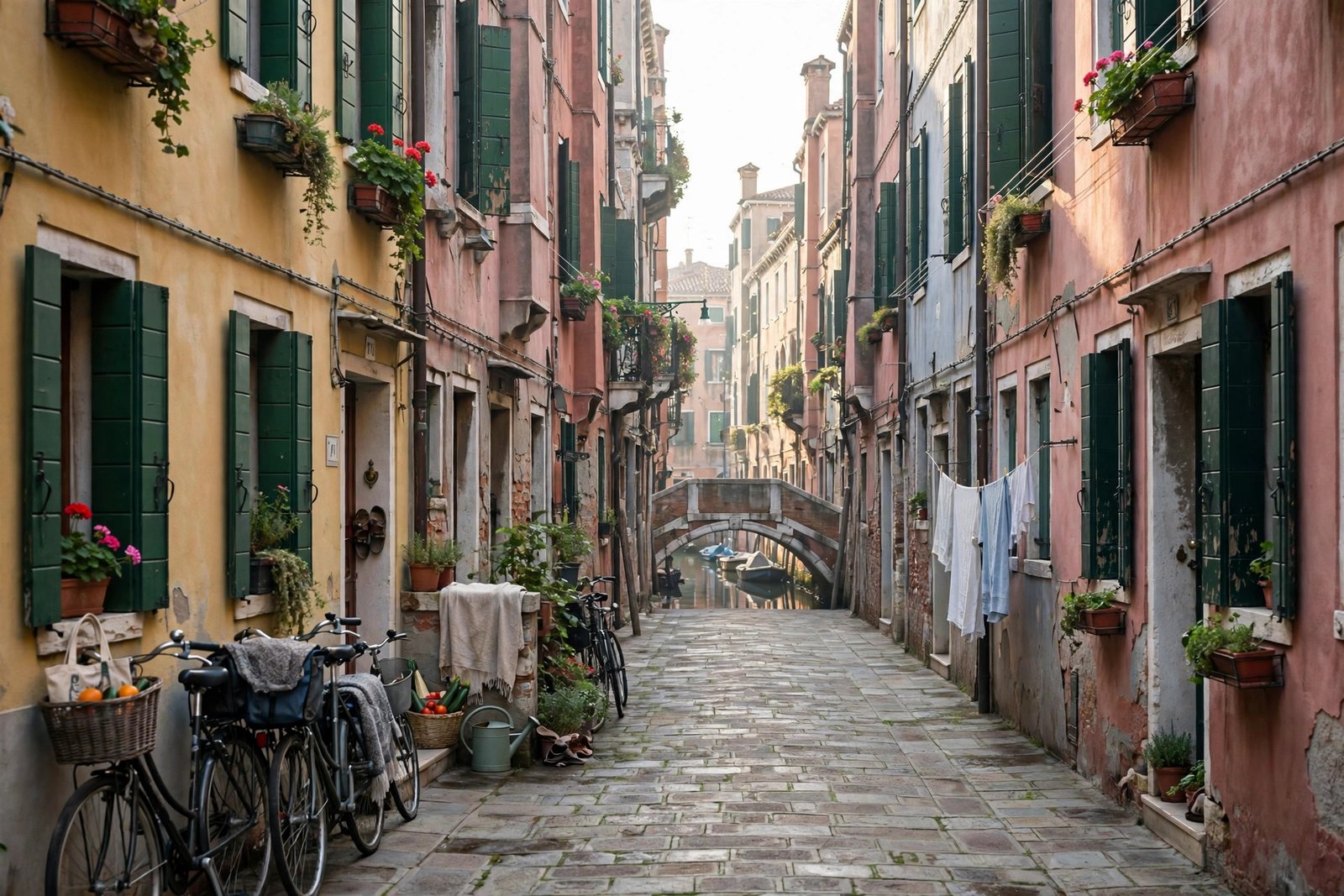
Key Takeaways
Buying a home in Venice follows a three-stage Italian process: a written offer (proposta), a preliminary contract (compromesso), and a final deed (rogito) signed before a public notary (notaio). Foreigners, including Americans, can generally buy property thanks to reciprocity rules, but every buyer needs an Italian tax ID (codice fiscale). Acqua alta, or high water, affects some properties more than others. Many historic buildings are culturally listed, triggering a 60-day state pre-emption period before closing. The purchase price is only part of the cost: taxes, professional fees, and maintenance can add a meaningful share on top.
What Is the Legal Process for Buying a Home in Venice, Italy?
The direct answer is that buying a home in Venice follows the standard Italian process: three formal stages ending with a deed signed in front of a public notary. Understanding these stages early helps you avoid surprises later.
The first stage is the proposta, a written offer to the seller. Once accepted, both sides have formally agreed on price and basic conditions, and the seller cannot entertain rival bids afterward, which gives buyers unusual certainty early in the process.
The second stage is the compromesso, also called the contratto preliminare, a preliminary contract that binds both buyer and seller. At this point the buyer typically pays a deposit, the caparra confirmatoria, commonly in the range of 10 to 20 percent of the price, although the exact figure is negotiated. If the buyer backs out without a valid contractual reason, the seller keeps the deposit.
The final stage is the rogito, the deed of sale signed before a notaio, a public officer chosen by the buyer. The notary verifies ownership history, checks for mortgages or debts tied to the property, drafts and registers the deed, and collects the transaction taxes, while the balance of the price is paid at signing.
| Stage | What Happens | What to Prepare |
|---|---|---|
| Proposta | Written offer accepted by the seller | Financing plan, codice fiscale started |
| Compromesso | Preliminary contract binds both parties | Deposit, legal and technical due diligence |
| Rogito | Final deed signed before the notaio | Balance of price, tax payments, registration |
| Pre-emption (if listed) | 60-day state right of first refusal | Funds held in notary escrow until it lapses |
Can Foreigners Buy Property in Venice, Italy?
Yes. Citizens of the European Union and the European Economic Area buy with the same rights as Italian citizens, and non-EU citizens can generally buy under the reciprocity rule, known as the condizione di reciprocità. Because Italians can legally buy real estate in the United States, the United Kingdom, Canada, and Australia, citizens of those countries are typically granted the same right in Italy.
Every buyer, Italian or foreign, needs a codice fiscale, the Italian tax identification code issued by the tax authority (Agenzia delle Entrate). You may not need it while viewing homes or making offers, but it becomes essential to finalize the sale, open a local bank account, and set up utilities afterward, so it is smart to apply early. One important limit to know: owning property in Italy does not grant residency or visa rights, so a long stay requires a separate visa.
If you cannot be present in Italy for every step, you can grant power of attorney to a trusted representative, often your attorney, to sign on your behalf. If you plan to finance through an Italian bank, expect stricter terms for foreign buyers, with larger down payments than domestic buyers typically face, commonly reported in the range of 40 to 50 percent.
Why Do Venice Historic Buildings Change the Deal?
The short answer is that Venice building stock is centuries old, and much of it is culturally listed as beni culturali, which adds legal steps, restricts what you can change, and raises the stakes of technical due diligence.
When a property is historically listed, the sale is suspended for a 60-day pre-emption period, the prelazione, during which the Italian Ministry of Culture may exercise a right to buy the property. The price typically sits in a protected notary escrow account, the deposito del prezzo, until the period lapses without intervention.
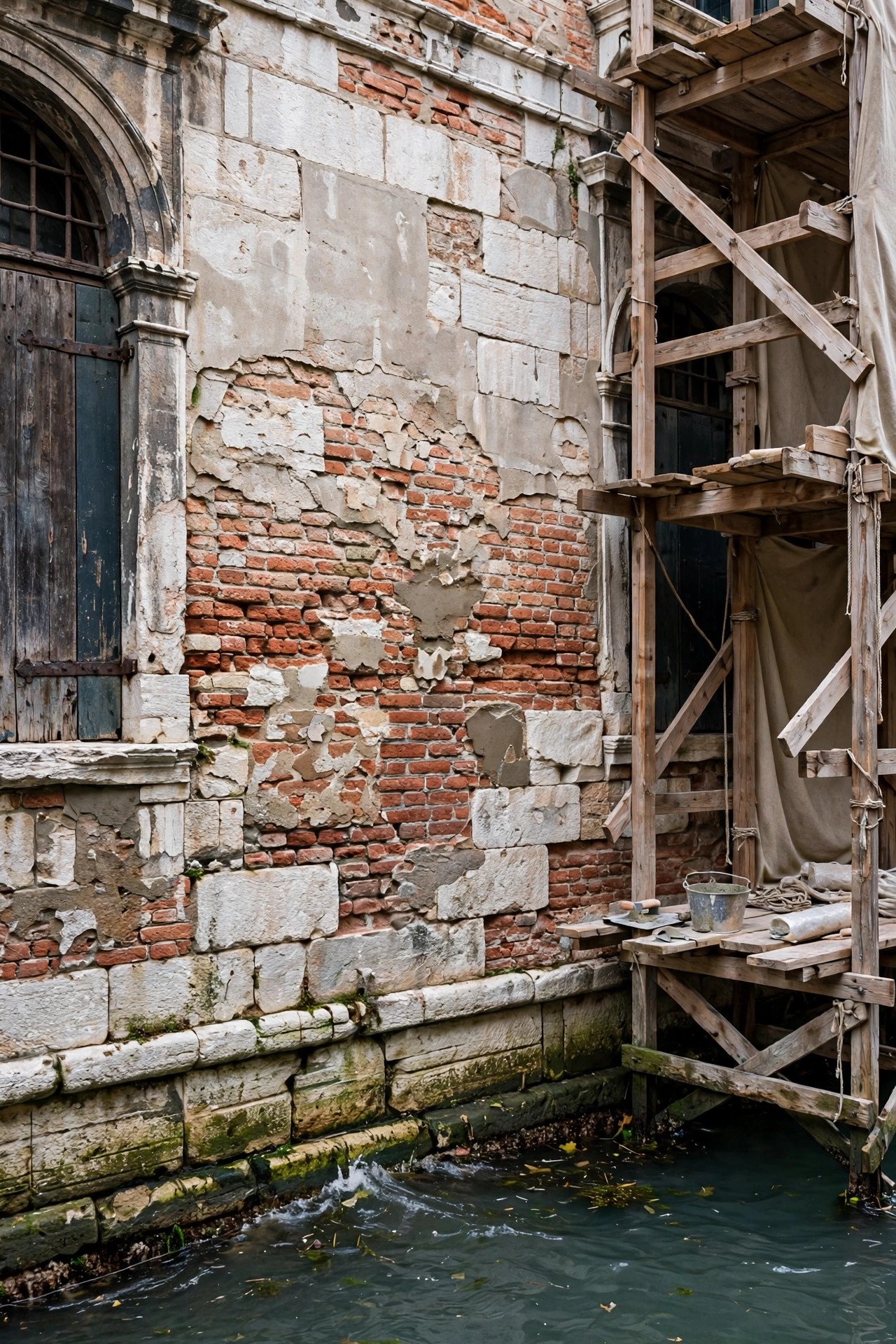
Also know what the notaio does and does not check. The notary verifies the legal chain of title, mortgages, and tax compliance, but does not inspect the physical condition of the building. Before signing the compromesso, hire an independent surveyor, a geometra, or an architect to confirm planning compliance, the conformità urbanistica, meaning the property matches its registered floor plans and permits. Unpermitted past alterations can create real problems, and heritage protections do not expire with time.
Questions to ask about any Venetian building
- What is the condition of the plumbing, electrical, heating, and roofing systems?
- What renovations have previous owners carried out, and were they permitted?
- Are there restrictions from the heritage listing on future work?
- What are the shared expenses and the state of common areas, if you are buying an apartment?
- Are there upcoming major works, like roof repairs, already planned or budgeted?
How Does Acqua Alta Affect Homeowners?
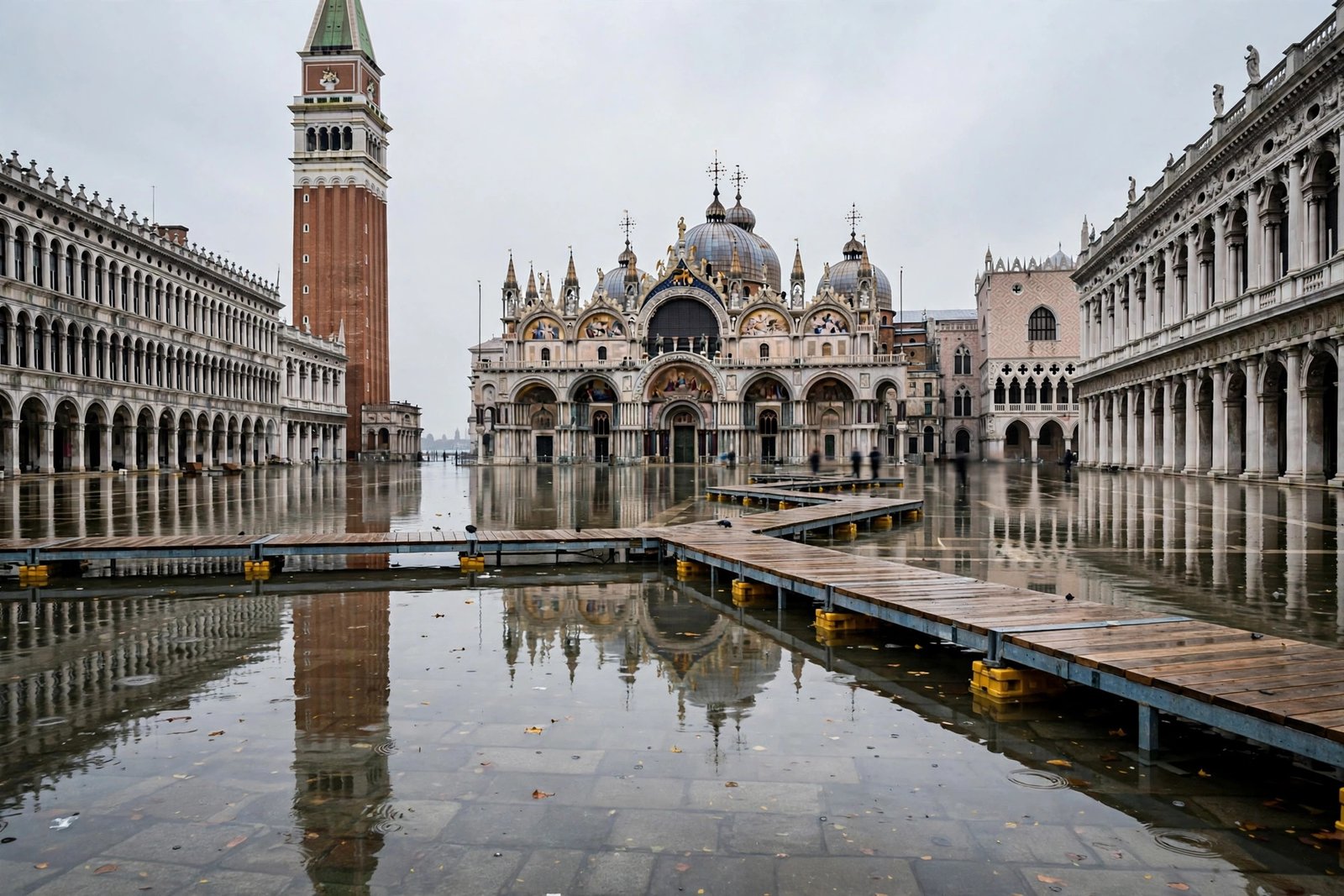
Acqua alta, literally high water, is the periodic tidal flooding that is part of life in Venice. The direct answer for buyers is that its impact varies greatly depending on the location and elevation of the property, so you should evaluate each home on its own facts rather than assuming every Venetian home floods.
Ground-level spaces are the most exposed, and properties in lower-lying areas may experience water more often, while higher floors are generally unaffected. When viewing a home, ask about its history with high water, what protective measures exist, such as barriers or raised ground floors, and how the building materials have held up. It also pays to think about insurance and regular maintenance, since policies reflect water exposure and upkeep of ground floors is part of Venetian homeownership.
What Does Buying in Venice Actually Cost?
The purchase price on a listing is only one part of the financial picture. Buyers should also budget for registration taxes, agency commissions paid by both sides, notary and legal fees, the surveyor or architect, and renovation and maintenance costs. For non-resident buyers, the registration tax is commonly reported at 9 percent of the cadastral value, the tax value recorded in the land registry, which is usually well below the market price, but exact rates change, so confirm current figures with your notary.
Because so many Venetian homes need updating, renovation costs deserve their own line in your budget. Cosmetic work is usually straightforward, but structural or historic renovations require approvals and specialists, so get estimates before you commit. For more stories from Italy and beyond, you can also browse the travel coverage on The Weird News Blog homepage.
- Set an all-in budget: include acquisition costs, renovation, and a contingency reserve.
- Get renovation quotes before the compromesso: the deposit you pay at that stage is hard to recover.
- Confirm tax treatment in writing: rules differ for residents, non-residents, and corporate buyers.
- Price the surveyor: a geometra or architect is your only independent check on physical condition.
How Will You Get Around, and Why Should Buyers Care?
Venice has no roads in its historic center. The answer to how you move around is a mix of walking and water: vaporetti, the water buses, connect the main routes, and pedestrian lanes and bridges cover the rest. That charm has daily consequences that smart buyers weigh before choosing a home.
Think through the practical routines of your life. How far is the nearest vaporetto stop with a heavy grocery bag? How will furniture be delivered, or luggage moved on arrival day? A home that looks close to a landmark on a map can feel much farther after a few bridges and narrow lanes, so walk the route between a prospective property and the stops and services you would use every day.
Which Venetian Neighborhood Should You Choose?
Venice is divided into six historic districts, the sestieri, plus the lagoon islands, and each has a distinct character, noise level, and rhythm across the year. Areas near major attractions are lively but can feel crowded in peak season, while quieter residential neighborhoods offer a calmer daily life but may sit farther from some services.
Explore in person if you can, at different seasons and times of day, and check the basics that matter for your household: groceries, medical services, schools if needed, and connections to the train station or airport. The right neighborhood is the one that fits your routine, not just your first impression.
How Do You Plan to Use the Property?
Your intended use should guide the search. A pied-à-terre for occasional visits, a full-time home, a future retirement base, and an investment property each point toward different neighborhoods, sizes, and price points. Be honest about how many weeks a year you will actually spend there before you fall in love with a layout that only works for full-time living.
If renting the property out is part of your plan, research the current short-term rental regulations carefully. Rules in Venice and across Italian cities change over time and carry registration and tax obligations, so treat this as a compliance question for a local professional. Knowing your plan in advance is one of the clearest benefits of understanding what to know before buying a home in Venice Italy before you start touring.
Frequently Asked Questions
Can an American buy a home in Venice, Italy?
Yes, in most cases. Under the reciprocity principle, US citizens can generally purchase property in Italy because Italians can buy real estate in the United States. You will still need a codice fiscale and a notary-supervised closing.
Do I need to speak Italian to buy property in Venice?
Not strictly, since you can grant power of attorney and work with English-speaking professionals. Still, contracts and the deed are Italian legal documents, so a bilingual advisor should review everything.
How long does the purchase process take?
Expect several months from offer to final deed, longer if the property is historically listed and the 60-day pre-emption period applies. Financing or pre-move renovations can extend the timeline.
Is flooding a dealbreaker for Venice homes?
Not necessarily. Acqua alta is periodic and its impact depends on elevation and location. Higher floors and well-adapted buildings experience it as a manageable part of life, so evaluate each property individually.
Are property taxes high in Venice?
Property taxation in Italy is often described as favorable compared with many other countries, with annual taxes typically calculated as a fraction of the cadastral value. Exact amounts depend on property type, location, and residency status.
Can I buy a home in Venice without visiting first?
Legally, yes, through power of attorney and remote coordination. Still, visiting in person is strongly recommended, since neighborhoods, water exposure, and building conditions are hard to judge from listings alone.
Do I need an Italian bank account?
You will need one to complete the purchase and manage ongoing costs like utilities, taxes, and building fees. A codice fiscale is required to open the account, so arrange it early.
By The Weird News Blog Staff