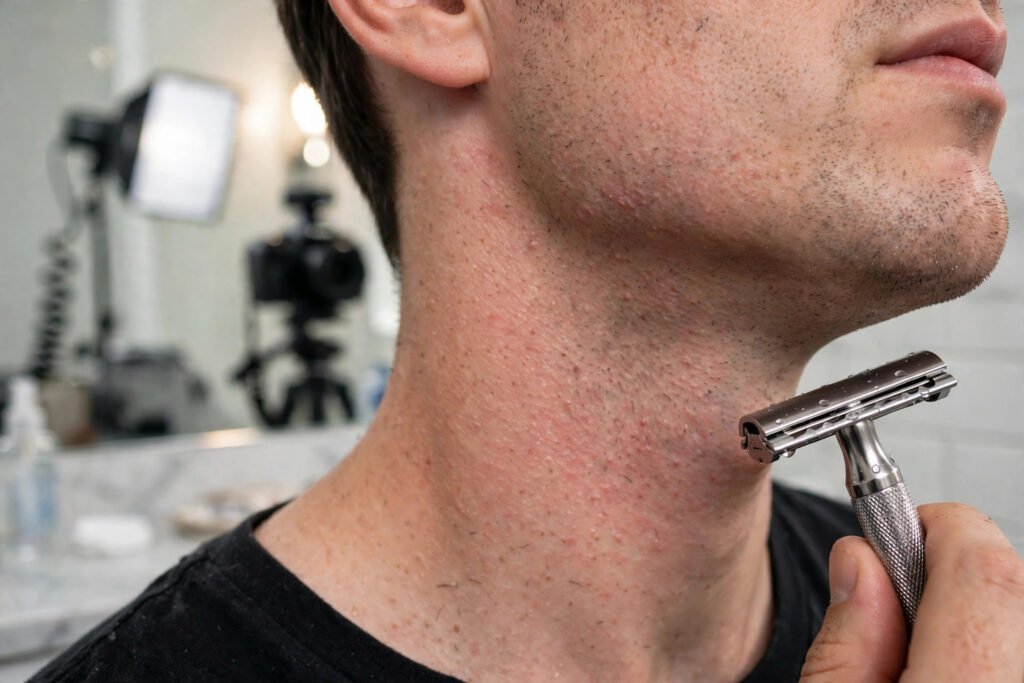
It happens to plenty of men. A big day arrives, the alarm goes off early, and there is just enough time for a quick shave to look sharp. Then, as the photographer lifts the camera, a row of red bumps shows up along the jaw, exactly where the flash will hit hardest.
Shaving right before photos is a habit that works against itself, and the pictures last far longer than the irritation. This guide to razor bumps on photo day shaving timing and what to fix later is built on a simple idea: when you shave matters more than what you shave with, and a small plan beats an emergency fix every time.

Key Takeaways
- Shave the evening before a photo shoot, not the morning of, so redness and irritation have hours to calm down.
- Use a fresh blade, warm water, and a shaving gel or cream, and shave with the direction of hair growth, never against it.
- On the morning of the shoot, only tidy the edges or neckline. Skip the full shave.
- If bumps appear anyway, do not pick or squeeze them. A cool compress for a few minutes and a fragrance-free moisturizer will calm the skin.
- If bumps return after every shave or become painful, talk to a dermatologist instead of treating each event as a one-off.
What is razor bumps on photo day shaving timing and what to fix later?
In plain terms, razor bumps on photo day shaving timing and what to fix later explained means this: it is the planning question of when to shave so your skin looks calm on camera, and what to do afterward if irritation shows up anyway. It is not about finding a miracle product. It is about giving your skin a recovery window before anyone points a lens at you.
To plan well, it helps to know which kind of reaction your skin has. Some men get immediate redness, tiny nicks, or a stinging feeling that fades within hours. Others develop delayed bumps a day or two later, when shaved hairs curl back into the skin and the body treats them like splinters. The first type rewards an earlier shave. The second type means you may need to shave earlier still, or skip the blade and reach for a trimmer instead.
Dermatologists call those delayed bumps pseudofolliculitis barbae. They form when sharp, freshly cut hairs, especially curly or coarse ones, curve back and pierce the surrounding skin, triggering an inflammatory response. People with very curly beard hair tend to be more prone to them. Shaving with the grain, using a sharp blade, and avoiding a super-close cut all lower the odds, because hairs left slightly longer are less likely to burrow back in.
Why is shaving on the morning of the shoot such a bad idea?
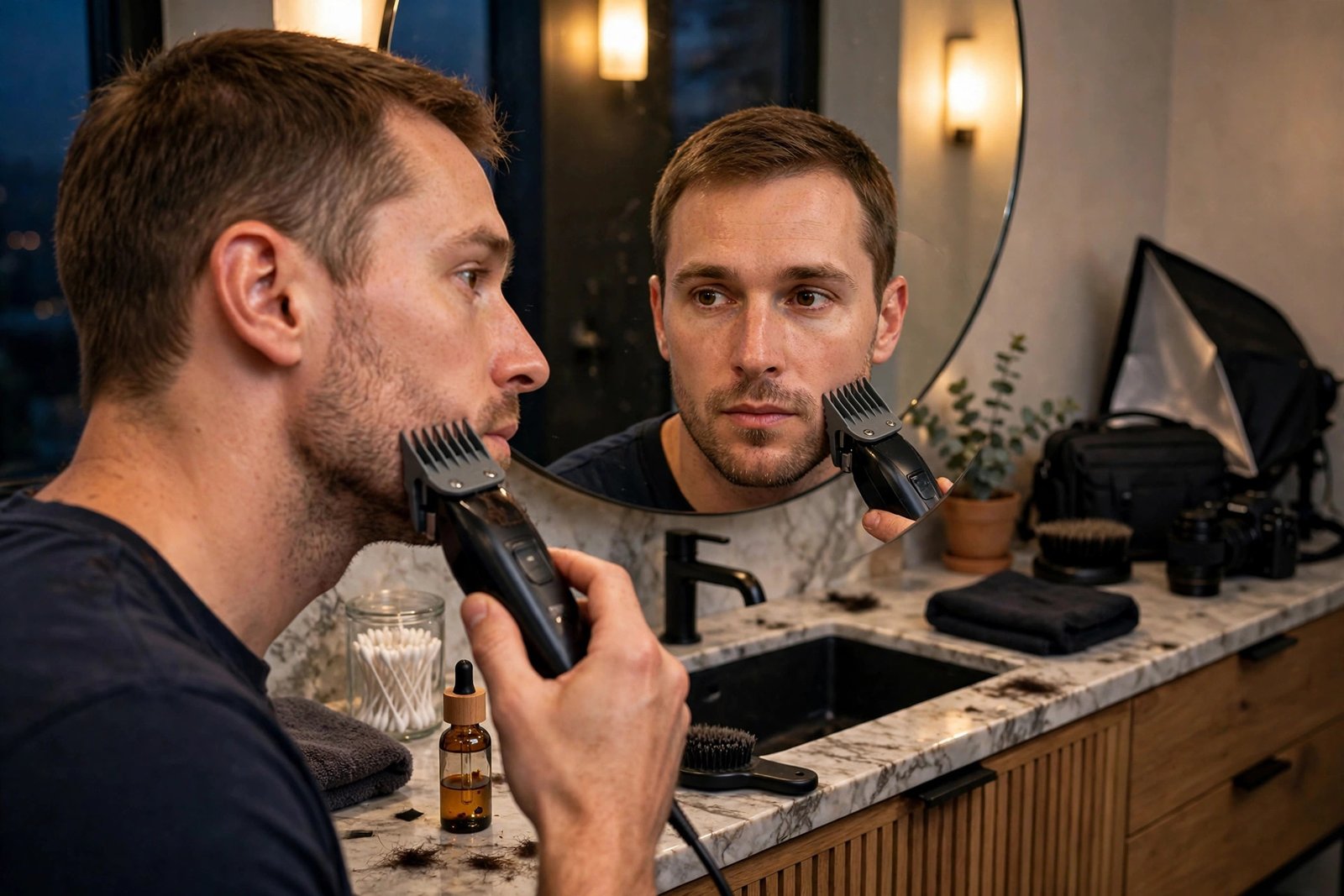
The short answer is that shaving removes a thin layer of skin along with the hair, and freshly shaved skin often reacts with redness, small bumps, or nicks that need hours to settle. Under a camera flash or in a close-up portrait, that irritation shows clearly, turning a grooming step into the very problem it was meant to solve.
Rushing makes everything worse. A hurried shave on a stressful morning usually means going against the grain, pressing too hard, and using a blade that has seen better days. Each of those choices adds irritation at the exact moment you can least afford it. A dull blade tugs instead of cutting cleanly, which leaves ragged hair tips that are more likely to curl inward.
Think of it this way: you would not iron a shirt seconds before walking on stage and expect the creases to vanish. Skin needs the same courtesy. The benefits of getting razor bumps on photo day shaving timing and what to fix later right are simple but real: calmer skin, cleaner jawlines in close-ups, and no emergency cover-up routine while the photographer waits.
When exactly should you shave before a photo shoot?
For most men, the safest answer is the evening before. An evening shave gives redness the whole night to fade, and any small nicks have time to close. If your skin usually reacts strongly, move the shave even earlier and do only light touch-ups closer to the shoot. Here is a simple timeline that removes most of the risk:
| When | What to do | Why it helps |
|---|---|---|
| A few days before | Test your shaving routine and watch how your skin reacts over the following days | You learn whether you get fast redness or slow bumps, so you can time the real shave |
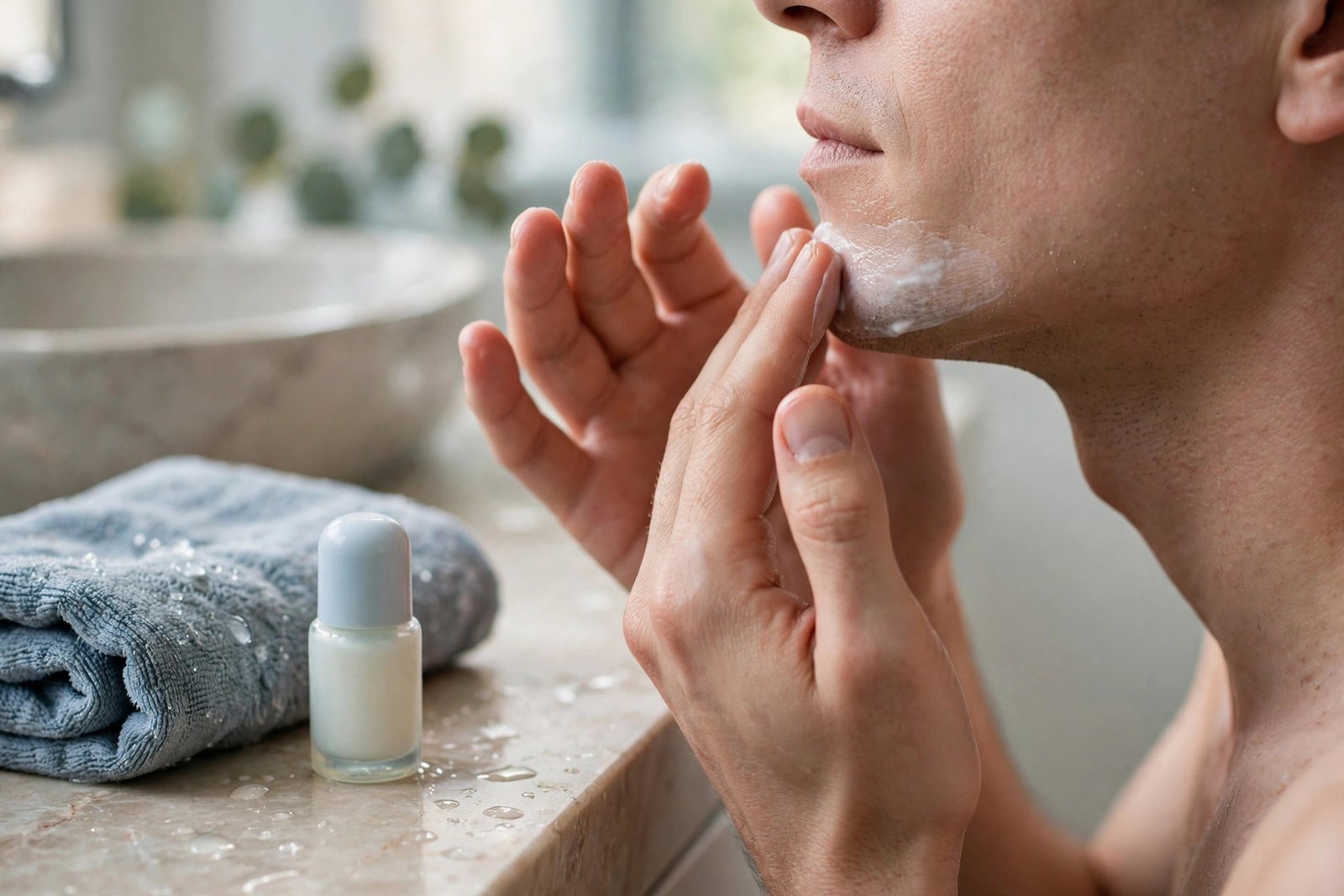
| The evening before | Shave with a fresh blade, warm water, and a gel or cream, going with the grain | A sharp blade and softened hair mean less tugging and fewer ingrown hairs |
| Right after shaving | Rinse with cool water and apply a fragrance-free moisturizer | Cool water calms the skin, and moisturizer protects the fresh surface overnight |
| The morning of | Only tidy the edges or the neckline if needed, with no full shave | You stay neat without restarting the irritation cycle hours before photos |
| After the shoot | Note what worked and what did not for next time | Your own reaction pattern is the best guide for future photo days |
That test shave a few days before is the step most men skip, and it is the most useful one. Everyone’s skin has its own schedule. Some faces calm down in two hours, others need a full day. Once you know your pattern, you can place the real shave at the point where irritation has faded but stubble has not yet returned.
A shaving technique that causes less irritation
Timing does the heavy lifting, but technique still matters. Dermatology guidance for bump-prone skin keeps coming back to the same handful of habits, and they are easy to fold into your evening-before shave:
- Soften the beard first with warm water, and use a shaving gel or cream so the blade glides instead of dragging.
- Shave with the direction of hair growth, not against it. Going against the grain cuts hairs below skin level, which is exactly what lets them curl back in.
- Use a fresh, sharp blade, and rinse it after every few strokes so it stays clean.
- Do not stretch or pull the skin taut while shaving, and avoid going over the same area again and again.
- Finish with a cool rinse and a fragrance-free moisturizer, and skip strongly perfumed aftershaves that can sting freshly shaved skin.
Men with very curly or coarse beard hair should be extra careful, since their hair shape makes ingrown bumps more likely. For them, an electric trimmer with a guard, or simply shaving a day earlier than usual, often works better than chasing the closest possible shave with a blade.
What should you do if the bumps show up anyway?
Sometimes the plan fails, and the mirror shows redness on the morning of the shoot. The first rule is to resist the urge to pick or squeeze anything. That only makes redness last longer and can leave marks that outlive the event itself. What you need is calm, not pressure.
A cool compress held against the skin for a few minutes can take the edge off the redness. Follow it with a light, non-tinted moisturizer, which also cuts down the shine that makes bumps stand out under a flash. If you are considering a tinted product to even out the tone, test it well in advance, because the wrong shade looks worse on camera than the redness it was meant to hide.
Photo editing is the quiet plan B. Small red dots, bumps, and nicks are local, temporary marks, exactly the kind of thing that can be removed from the photos that matter without changing the face. It is a sensible backup for the few marks that slip through despite good preparation, not a substitute for it.
One more thing: if bumps keep returning after every shave, become painful or pus-filled, or start leaving dark marks or scars, stop treating each event as a one-off. That is the point to talk to a dermatologist, who can confirm what is going on and suggest options such as prescription creams or, for recurring cases, longer-term hair reduction.
Is skipping the shave the smartest move?
Honestly, sometimes it is. A short, even stubble, trimmed with a guard a few days before the shoot, looks deliberate in photos and sidesteps the irritation of a close shave entirely. For men whose skin rebels against every blade, this is often the most reliable photo-day strategy of all.
The details make the difference. Clean up the neckline and the cheek lines the evening before so the stubble reads as groomed rather than forgotten. Well-shaped stubble photographs well in both close-ups and group shots, and it hides small differences in skin tone along the jaw that a fresh shave can exaggerate.
Plan the shave the way you plan the outfit: ahead of time, with a fresh blade, and with enough room for your skin to recover. Keep stubble in mind as a genuine alternative, and leave editing for the few red marks that slip through. For more everyday guides written in the same practical spirit, browse The Weird News Blog.
Quick Facts
| Detail | What to know |
|---|---|
| Medical name | Pseudofolliculitis barbae, commonly called razor bumps |
| Where it shows | Most often the beard area, jawline, and neck |
| Why it happens | Shaved hairs, especially curly or coarse ones, curl back into the skin, and the body reacts to them like foreign objects, causing inflammation |
| Who is more prone | People with very curly or coarse beard hair |
| Best shaving time before photos | The evening before, with only light touch-ups on the morning of the shoot |
| Fastest on-the-day calm-down | Cool compress for a few minutes, then a fragrance-free moisturizer; do not pick or squeeze |
| When to see a doctor | Bumps that are painful, pus-filled, keep returning, or leave marks or scars |
Frequently Asked Questions
Should I shave on the morning of a photo shoot?
In most cases, no. A morning shave leaves redness, tiny bumps, and nicks no time to settle, and camera flash makes fresh irritation very visible. Shave the evening before instead, and limit the morning to tidying the edges or neckline.
How long before photos should I shave?
The evening before works for most skin types, giving irritation the whole night to fade. If your skin reacts strongly or you tend to get delayed bumps, test your routine a few days earlier so you know your own recovery window.
Do razor bumps really show up in flash photography?
Yes. Redness, small bumps, and nicks that look minor in a bathroom mirror become obvious in close-ups and under flash, because the light highlights texture and shine on irritated skin.
What is the fastest way to calm redness on photo day?
Hold a cool compress against the skin for a few minutes, then apply a light, fragrance-free moisturizer. Do not pick or squeeze the bumps, which only extends the redness and can leave marks.
Can I cover razor bumps with a tinted product?
You can, but only with a shade you have tested in advance. An untested tinted product can look worse on camera than the redness itself, so try it days before the shoot, not minutes.
Is a trimmer better than a razor before photos?
For bump-prone skin, often yes. An electric trimmer with a guard does not cut hairs below skin level, so they are far less likely to curl back in. A short, even stubble trimmed a few days before also looks intentional in photos.
When should I see a dermatologist about razor bumps?
See one if the bumps are painful or pus-filled, keep coming back after every shave, or leave dark marks or scars. Recurring bumps may need prescription treatment or a longer-term plan rather than another round of home fixes.
By Mussarat Zafar