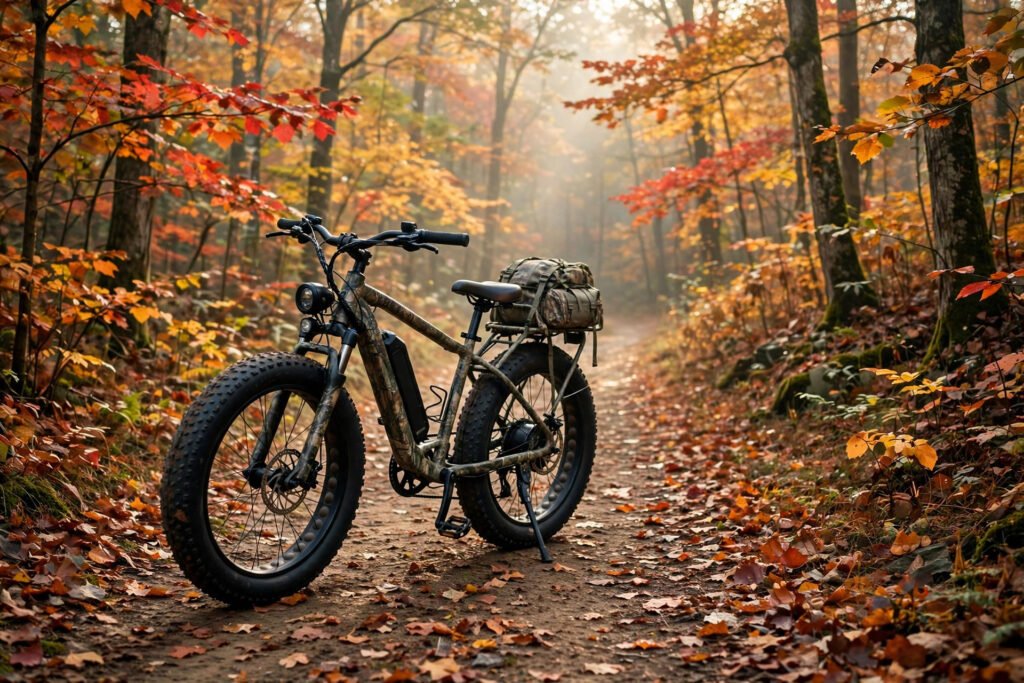
Fall brings crisp mornings, turning leaves, and hunting season. More hunters are swapping noisy ATVs and long hikes for electric bikes, which roll quietly, leave almost no scent trail, and get you to your stand without a sweaty trek. But one mechanical choice shapes the whole ride: the motor. The mid drive vs hub motor electric bikes for fall hunting debate comes down to where the motor sits and how it delivers power.
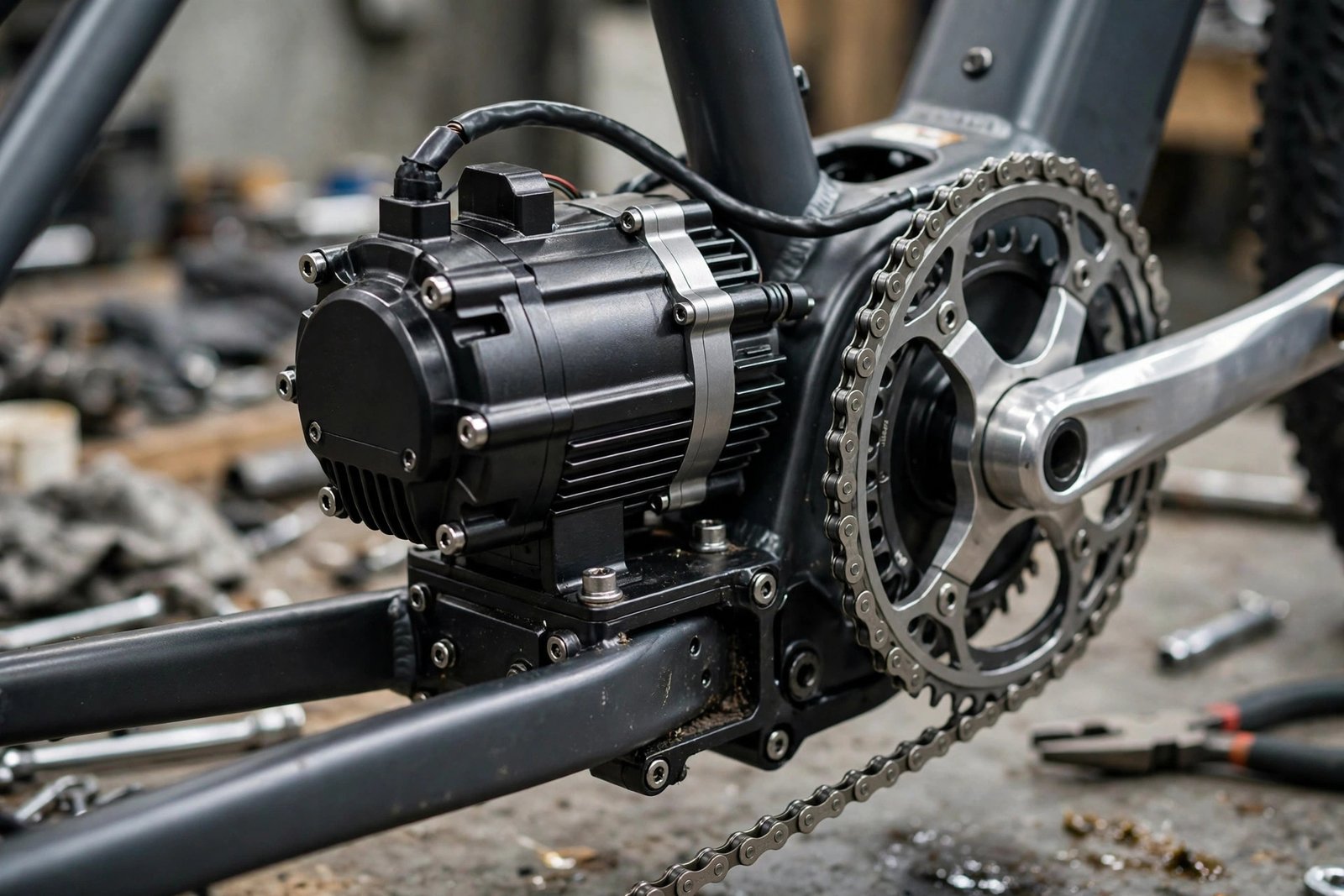
A mid-drive motor mounts at the crank, in the center of the frame, and sends power through the chain and gears. A hub motor hides inside the front or rear wheel hub and drives that wheel directly, bypassing the drivetrain. That one design difference changes climbing ability, balance, ride feel, maintenance, and cost. Here is how to match the right motor to your terrain, gear load, and budget.
Key Takeaways: A mid-drive is the stronger pick for steep, technical, mountainous hunting country, because it multiplies torque through the bike’s gears and keeps weight centered and low. A hub motor is the simpler, more affordable pick for rolling hills, logging roads, and flat farmland, and its throttle can still get you home if the chain breaks. Mid-drives wear chains and cassettes faster and need more drivetrain care. Hub motors concentrate weight in the wheel, making them harder to lift over obstacles and less composed on long, steep climbs. Pair either with hydraulic disc brakes, fat tires, and a frame rated for your loaded weight, and check local access rules before riding.
Want the mid drive vs hub motor electric bikes for fall hunting explained without jargon? Start with the mid-drive. Because the motor turns the crank, every gear on the cassette becomes a gear for the motor. Shift low and torque multiplies, like low range in a truck. You keep a steady pedaling rhythm while the motor does the heavy lifting up grades that would otherwise have you walking.
A hub motor does the opposite. The sealed unit spins the wheel directly, independent of chain, cassette, and shifters, with a single fixed gear ratio. Most hub e-bikes also carry a throttle for instant power without pedaling, useful for a rolling start on a grade, a push through mud, or a quiet creek crossing.
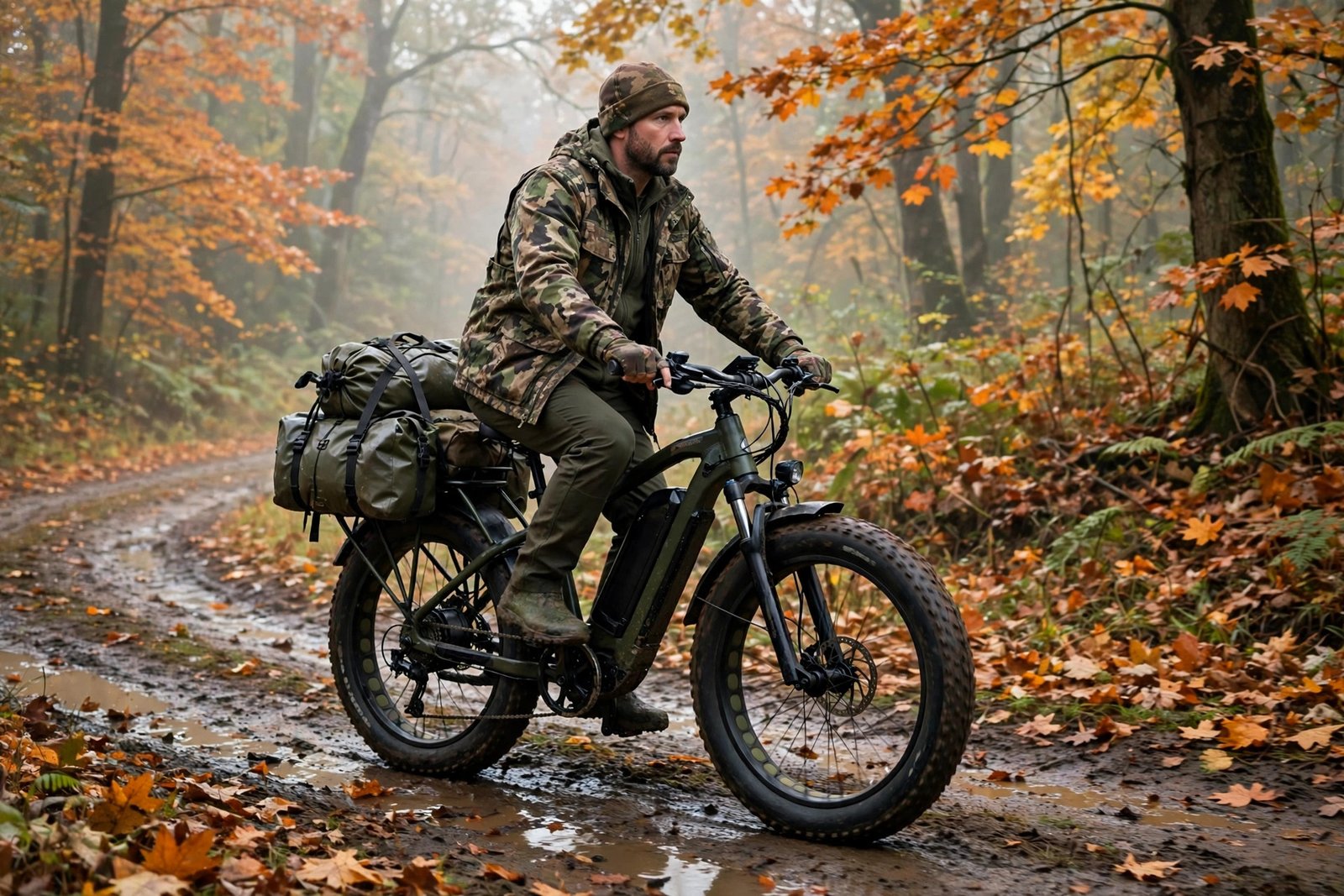
Fall hunting piles on demands a casual ride never will: stands, cold-weather layers, optics, and water on the way in, possibly game on the way out. Trails hide under wet leaves, ruts fill with rain, and daylight is short. Your motor must handle weight, weather, and long days far from an outlet.
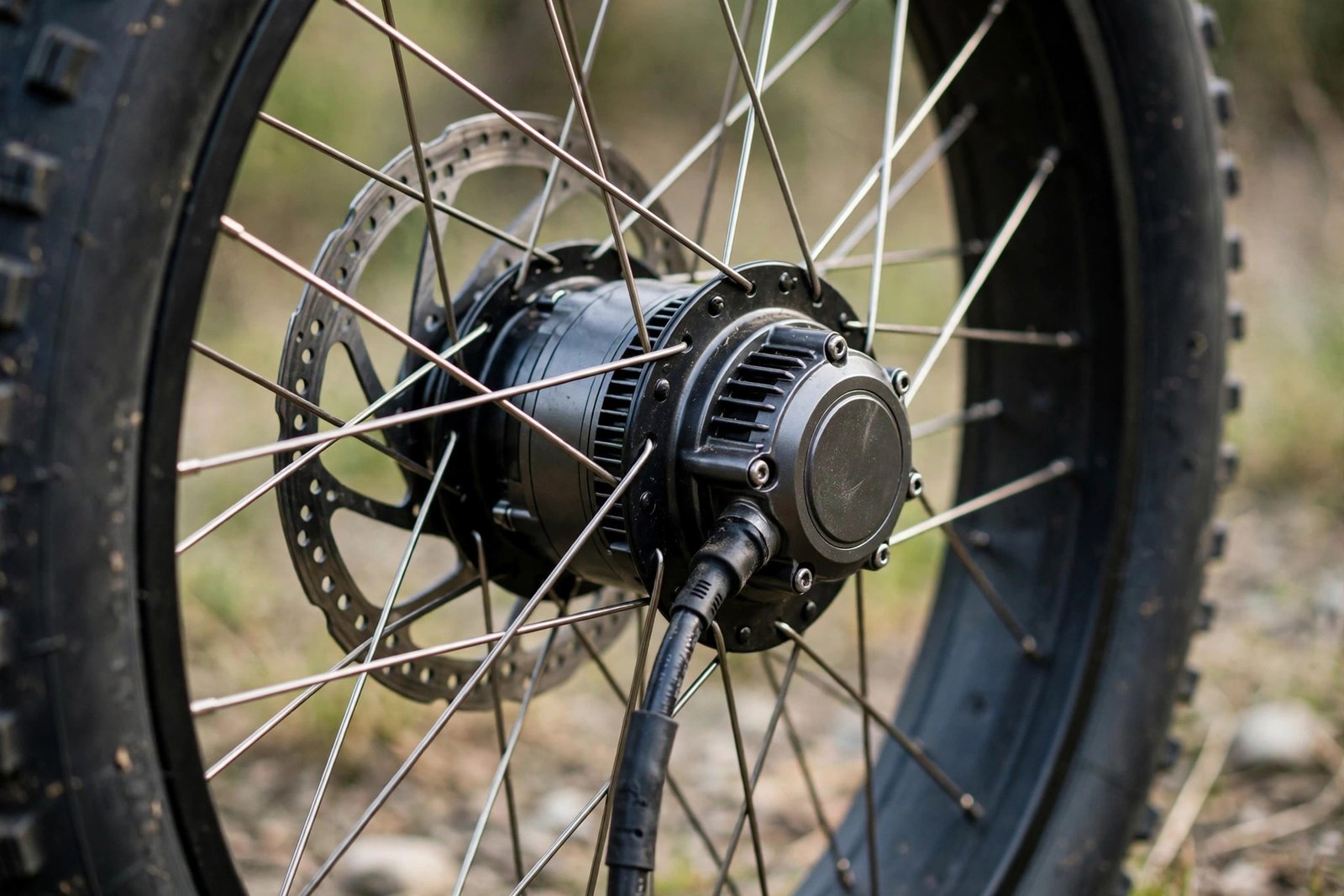
Weight placement is the most noticeable field difference. A mid-drive sits low and centered, giving a planted feel on off-camber trails, rooty descents, and side-hills. A hub motor puts pounds of mass in the wheel, usually the rear. You feel it lifting the wheel over logs or fences, and on steep, loose climbs the heavy rear can feel bogged down.
A mid-drive feels like stronger pedaling, smooth and natural, and stays quieter under load because the gears keep the motor efficient. A hub motor gives a distinct push from the driven wheel, closer to a small silent ATV than a bicycle. Both are dramatically quieter than any gas engine, which is what counts when you are slipping into a stand before dawn.
A mid-drive routes all power through chain and cassette, so those wear faster and want regular cleaning, especially after muddy fall rides. A hub motor barely touches the drivetrain, so chains last about as long as on a regular bike, and the sealed unit shrugs off weather. The tradeoff: a flat on the motor wheel means unplugging a cable and wrestling a heavier wheel, while mid-drive wheels remove like any standard bike.
How Does a Mid-Drive Motor Actually Work?
It mounts at the bottom bracket and drives the chainring, so its power flows through the chain, cassette, and derailleur exactly like leg power. Every shift changes the motor’s gearing too, and a torque sensor usually scales assistance to match your pedaling effort.
The gear advantage on the hunt
Downshift before a climb and torque multiplies through the low gear, letting you crawl up steep, loaded grades at a relaxed cadence. The motor also stays near its efficient speed, which stretches battery life on all-day rides far from a power source.
The tradeoffs to accept
All that power through the drivetrain means faster chain and cassette wear, so budget for replacements and keep things clean. Mid-drives cost more up front and are best serviced by a shop familiar with them.
How Does a Hub Motor Actually Work?
It is a self-contained motor built into the wheel hub, usually the rear, driving the wheel directly through one fixed gear ratio. It works independently of pedals, chain, and gears, with pedal assist, throttle, or both.
The simplicity advantage on the hunt
Fewer moving parts and no drivetrain interaction make hub motors dependable season after season. The throttle gives on-demand power for starts, mud, and crossings, and if the chain snaps miles out, the throttle can still carry you back to the truck.
The tradeoffs to accept
One fixed ratio means harder work on steep, sustained climbs, with higher current draw and faster battery drain. The wheel-concentrated weight also dulls handling on technical terrain and complicates lifting the bike over obstacles.
Which Motor Climbs Steep Hunting Terrain Better?
The mid-drive wins here, and it is not close. Gear-multiplied torque keeps pulling on long, steep, loaded grades, and centered weight keeps the bike stable on the technical descents that follow every climb.
- Torque multiplies through low gears for crawling up steep grades with a pack.
- Centered, low weight steadies the bike on off-camber trails and descents.
- Efficient uphill running preserves battery on all-day backcountry trips.
- Smooth power delivery keeps traction on loose climbing surfaces.
Which Motor Is More Reliable Deep in the Backcountry?
Both are dependable, but they fail differently. A hub motor’s chain independence is a built-in backup plan, while a mid-drive depends on a healthy drivetrain but uses standard parts any bike shop stocks. Pack a basic kit either way: chain lube and a spare quick link for a mid-drive, and knowledge of the motor-cable disconnect for trailside flat repairs on a hub motor.
Which E-Bike Motor Is Quieter for Approaching Game?
Both are far quieter than a gas ATV, which is what matters. Mid-drives run quieter under heavy load since gears keep the motor efficient, while a hub throttle lets you coast silently without pedaling. Game keys on odd noise and human scent, and either motor lets you roll logging roads and field edges with little more than tire noise, no exhaust, and no sweat-soaked clothes announcing you.
How Do Mid-Drive and Hub Motors Compare Side by Side?
This table puts the whole comparison in one place so you can weigh each factor against your terrain and budget.
| Feature | Mid-Drive Motor | Hub Motor |
|---|---|---|
| Motor location | Center of frame, at the crank and bottom bracket | Inside the front or rear wheel hub |
| Power delivery | Through chain and gears, torque multiplies with downshifts | Directly to the wheel, single fixed gear ratio |
| Hill climbing | Excellent on steep, sustained, loaded climbs | Good on moderate grades, strains on long steep climbs |
| Weight balance | Low and centered, stable and predictable | Concentrated in the wheel, can feel front or rear heavy |
| Ride feel | Natural, like stronger pedaling | Noticeable push or pull from the driven wheel |
| Drivetrain wear | Higher, chain and cassette wear faster | Lower, motor is independent of the chain |
| Maintenance | More drivetrain care, standard wheel removal | Simpler overall, heavier wheel with motor cable for flats |
| Typical cost | Generally more expensive | Generally more affordable |
| Throttle | Less common | Common, a backup if the chain breaks |
| Best hunting use | Steep mountains, technical terrain, heavy hauling | Rolling hills, logging roads, flat farmland, value builds |
Which Motor Should You Pick for Your Hunting Style?
Match the motor to your terrain. The mid drive vs hub motor electric bikes for fall hunting benefits change completely with the landscape, so there is no universal winner, only the right tool for your hunt.
Steep mountains and backcountry: elk, mule deer
Choose a mid-drive. Gear-multiplied torque, centered balance, and efficient climbing are built for this work, including hauling gear in and packing game out.
Rolling hills and hardwoods: whitetail, turkey
Either works. A hub motor offers value and a handy throttle for cruising logging roads to your stand. A mid-drive feels more natural on varied ground and handles steep draws with less strain.
Flat farmland and field edges: waterfowl, predators, stand access
Choose a hub motor. Flat farmland never needs the mid-drive’s climbing talent, so the hub’s simplicity, lower cost, and throttle-on-demand are the smarter spend.
What Else Matters Besides the Motor for Fall Hunting?
Brakes, tires, and carrying capacity decide whether the bike is safe and useful. Judge the whole package, not just the motor.
- Brakes: hydraulic disc brakes with large rotors, the top safety item for heavy loads on steep descents.
- Tires: fat tires, 4 inches or wider, the hunting standard for mud, wet leaves, sand, and snow.
- Suspension: a front suspension fork at minimum for off-road comfort and control.
- Frame: sturdy build with a verified load rating covering you, your gear, and potential game.
- Cargo: racks, panniers, or a game trailer to haul stands, decoys, and meat.
- Battery planning: cold and heavy loads drain charge faster, so plan range conservatively.
- Access rules: e-bike hunting regulations vary by state and land manager, so confirm before riding.
For more outdoor gear breakdowns and sports coverage, visit The Weird News Blog.
What Do Hunters Ask Most About E-Bike Motors for Fall Hunting?
These are the questions hunters ask most when choosing between a mid-drive and a hub motor for the fall season, with straight answers.
What is the main difference between mid-drive and hub motors for fall hunting?
A mid-drive sits at the crank and powers the bike through its gears for better climbing and balance. A hub motor sits in the wheel hub and drives it directly for simplicity, lower cost, and usually a throttle.
Is a mid-drive better for steep mountain hunting?
Yes. It multiplies torque through the gears for long, steep, loaded climbs, and its centered weight handles technical descents more safely.
Can a hub motor get me home if the chain breaks?
Usually yes. The motor drives the wheel independently of the chain, so the throttle can carry you back to your vehicle.
Do mid-drives wear out chains faster?
Yes. All motor power flows through the chain and cassette, so they wear faster and need regular cleaning and timely replacement.
Are e-bikes quiet enough for hunting?
Yes, far quieter than gas ATVs. Both types run with only a soft whir, without the engine noise and exhaust scent that alert game.
What tires and brakes should a hunting e-bike have?
Fat tires 4 inches or wider for traction, plus hydraulic disc brakes with large rotors for safe stopping under load.
Which motor suits flat farmland hunting?
A hub motor. Flat ground never needs a mid-drive’s climbing edge, so the hub’s simplicity and throttle make it the practical pick.
Mid drive vs hub motor electric bikes for fall hunting is really a terrain question. Mountain hunters who climb loaded will get the most from a mid-drive. Those working rolling hardwoods, logging roads, and flat farm country will find a hub motor simpler, cheaper, and fully capable. Either way, you gain quiet, scent-free miles no truck or ATV can match.
By the Weird News Blog sports desk.