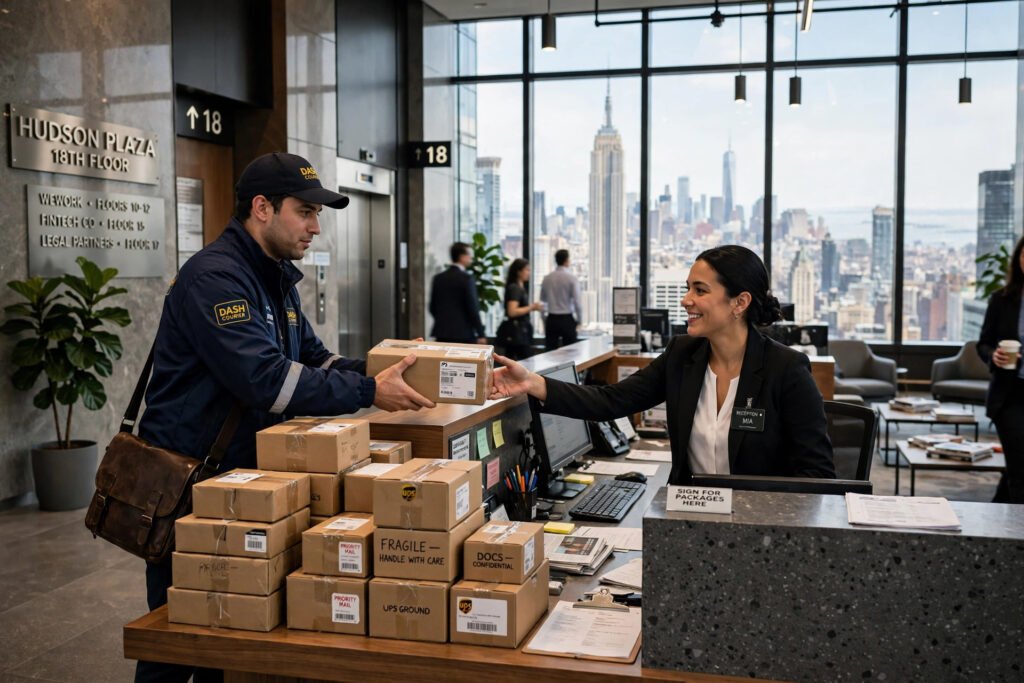
Walk into a busy Midtown office lobby on a weekday morning and you may first notice the parcels, not the reception desk. Sneakers, skincare orders, meal kits, and books wait for employees who may not arrive until later in the week. How NYC offices are handling the surge in personal deliveries is now a practical workplace question, because volume, timing, and storage all changed at once.
Key Takeaways: Many New York employees now ship personal orders to the office because home delivery can be unreliable in walk up buildings and shared lobbies. Hybrid schedules mean parcels often wait several days for collection. The offices coping best use a clear policy, fast digital logging, automatic notifications, a set pickup deadline, and a recorded handover. Smart lockers help larger buildings, while smaller offices often rely on a simple, consistent routine.
For many New Yorkers, the office is simply the most reliable address they use during the week. A staffed lobby, controlled entry, and a predictable pickup point solve problems home delivery often creates in a dense city.
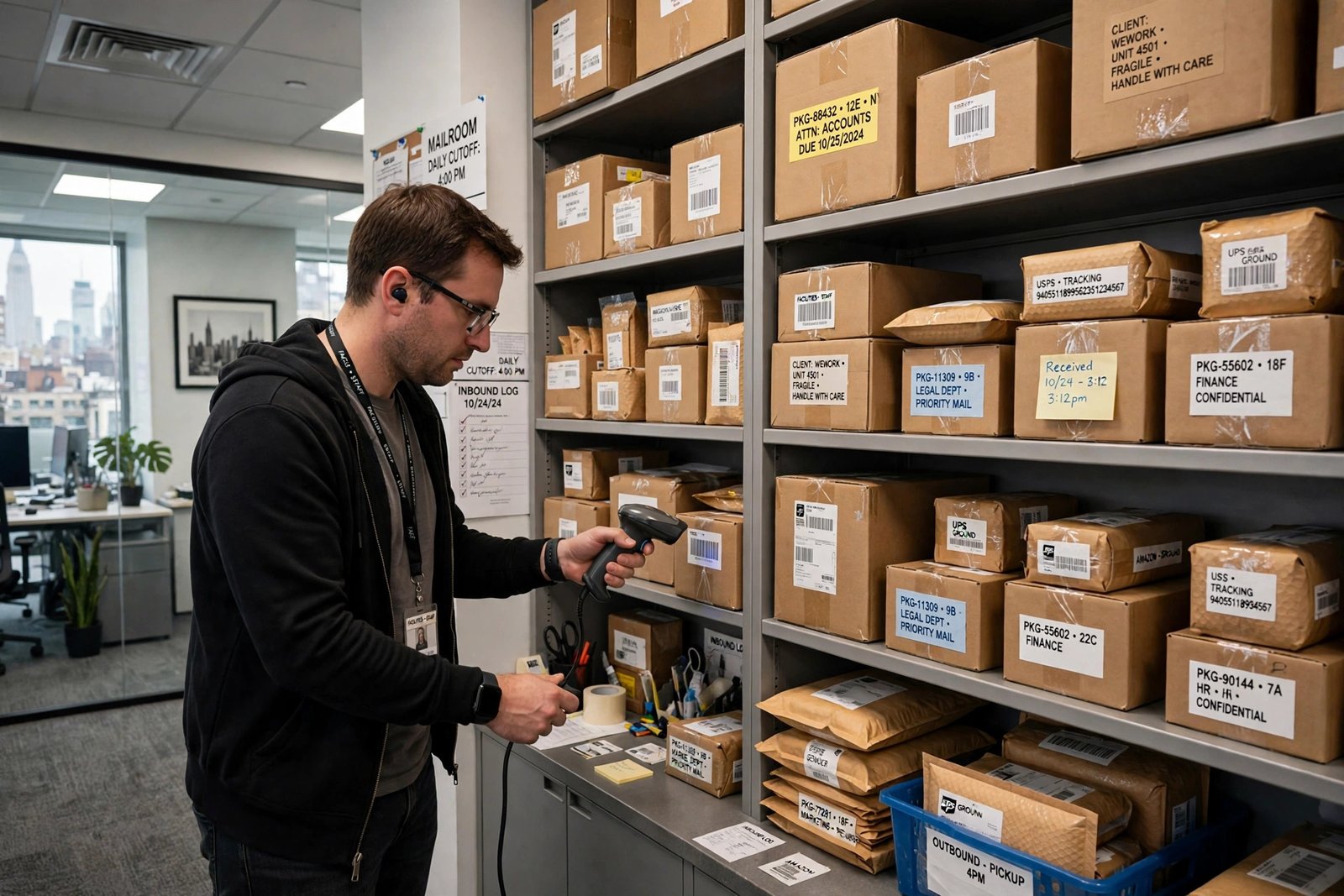
This guide explains how NYC offices are handling the surge in personal deliveries, why home delivery is difficult for many city workers, what policies work, and how front desk teams can keep the process fair, fast, and secure.
Why do so many New Yorkers ship personal packages to the office?
The short answer is reliability. Many New York apartments lack a doorman, a secure package room, or a safe place to leave a box. In a walk up building, a parcel may sit in a shared vestibule where anyone entering can reach it.
The office changes that calculation. Someone is usually at the desk during business hours, and the recipient knows where to ask if something is missing. A package that arrives safely and waits in a known place beats a faster delivery that disappears from a stoop.
Work patterns add to the appeal. Many employees travel by subway and may not be home during the usual delivery window. Collecting a parcel at work removes the need to rush home or visit a carrier location after hours.
Why were older office mailrooms not ready for this change?
Before personal deliveries became common, most office mailrooms were built for business mail: letters, documents, and office supplies. A paper log, a shelf behind the desk, and a quick email were usually enough, because volume was low.
Personal parcels broke that model. They arrive in many shapes and sizes, from many carriers, often in bursts around lunch or late afternoon. Logging each one by hand takes time, especially when the same staff member is also greeting visitors. When the shelf fills, boxes move to the floor or a spare room, and mix ups become more likely.
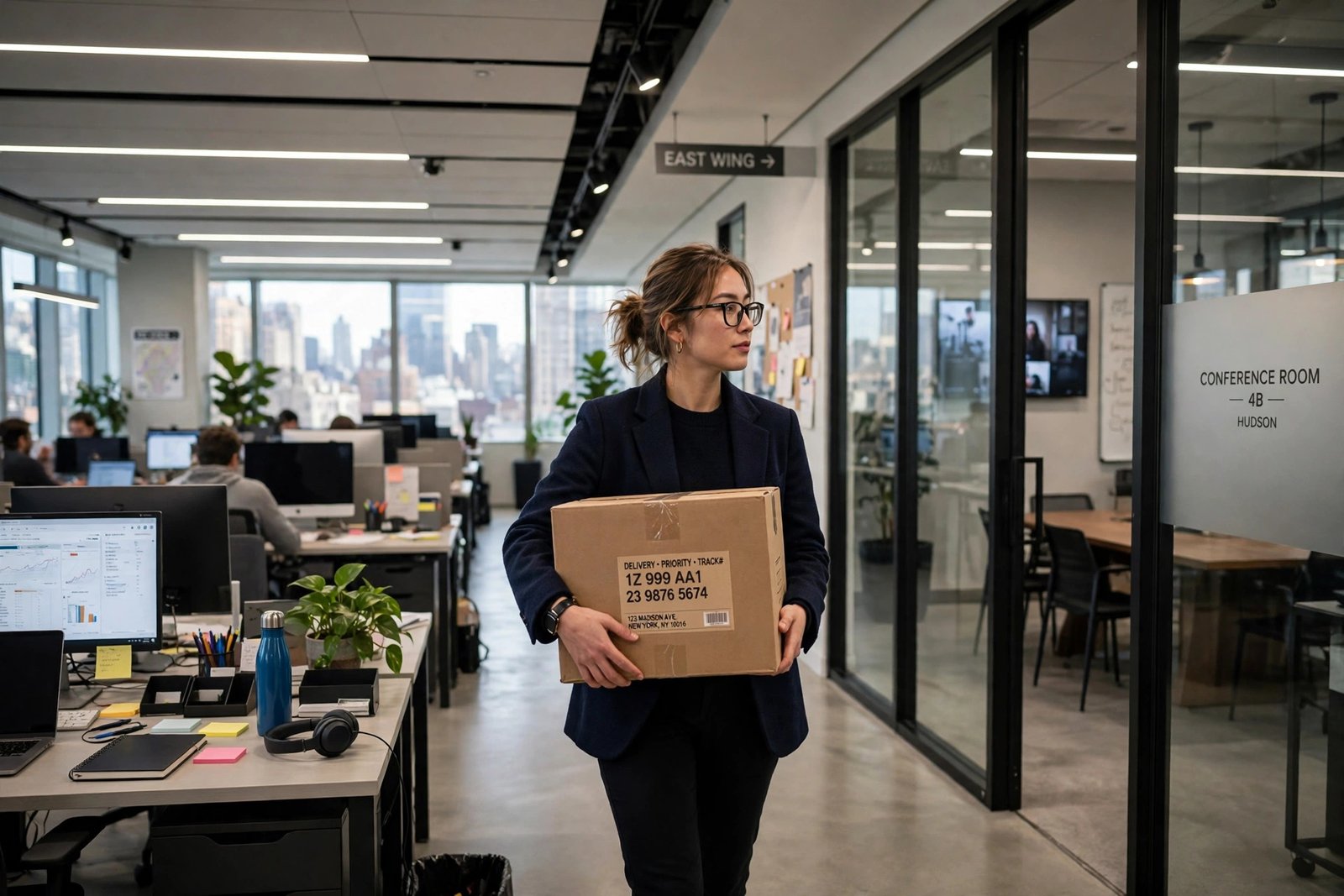
A system built for a handful of business items cannot absorb many personal parcels without new space, tools, or rules.
How have hybrid schedules changed package storage?
Hybrid work has changed the timing of parcel collection more than the number of deliveries. Many employees now come in two or three days a week, so a Monday package may not be collected until Wednesday or Thursday.
That longer wait creates practical problems. Shelves stay full, and staff spend more time searching for older items. Perishable goods, such as meal kits and flowers, are harder to manage when the recipient cannot collect them the same day.
Offices have responded by treating storage time as part of the policy. A clear pickup window, a reminder before the deadline, and a known process for uncollected items help staff plan space.
What are the main policy options for personal deliveries?
Offices facing the surge generally choose one of three broad approaches. An open policy accepts personal packages with few limits. A limited policy allows them with rules on size, type, and pickup time. A business only policy stops personal deliveries altogether. Each option reflects a different balance between employee convenience and staff workload.
Many New York offices have settled on the middle option. A limited policy recognises that employees value the convenience, while also giving mailroom staff a workable set of boundaries. The key is clarity. A policy that is written down, shared with all staff, and applied consistently is far easier to run than a set of informal favours that depend on who is at the desk.
| Policy approach | How it works | Main benefit | Main drawback |
|---|---|---|---|
| Open policy | Personal packages are accepted with few restrictions | Popular with staff and simple to explain | Highest volume and storage pressure |
| Limited policy | Size limits, excluded items, and pickup deadlines apply | Volume stays manageable | Needs clear rules and consistent enforcement |
| Business only policy | Only business mail and supplies are accepted | Lowest workload for front desk staff | Can feel unwelcoming to employees |
What should a limited delivery policy cover?
A useful policy answers the questions employees and couriers ask most often. It should state the maximum size or weight that the mailroom can accept, whether perishable items are allowed, and how long a parcel will be held. It should also explain what shipping details employees must use, where they should collect items, and what happens to uncollected parcels.
Consistency matters as much as the wording. If one shift accepts oversized boxes and another refuses them, employees receive mixed messages and staff face avoidable disputes. A short written policy, shared during onboarding and posted near the collection point, helps everyone follow the same rules.
How do modern logging and notification systems work?
The offices handling the surge best tend to follow the same routine. Staff log every parcel on arrival, recording carrier, tracking number, recipient, and storage location. The recipient then receives an automatic email or text saying the delivery is ready, and pickup is confirmed by signature, scan, or code.
That record protects both sides. If an employee asks where a parcel is, staff can check the log instead of searching from memory, and the office can show when it arrived and who collected it.
Digital tools also reduce the work of chasing recipients. Automatic reminders prompt collection before a deadline, and a searchable log helps during a busy morning rush.
Are smart lockers a good fit for every office?
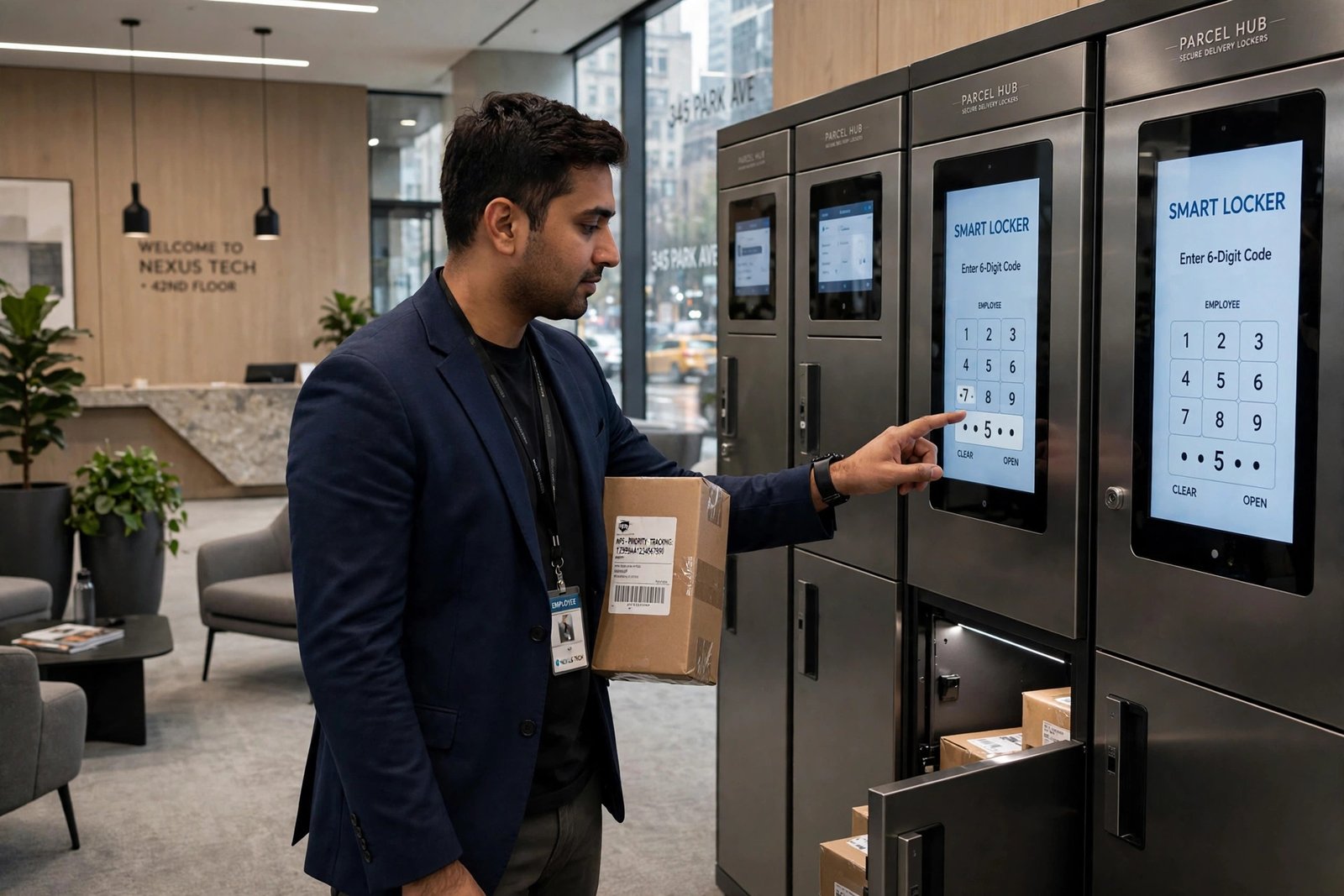
Smart lockers work well in larger buildings with steady parcel volume. An employee receives a code, opens the assigned locker, and collects the parcel without joining a queue at the desk. That self service model supports hybrid attendance, because collection does not depend on front desk hours in the same way.
Lockers are not a perfect fit everywhere. They need floor space, power, installation, and ongoing management. Small offices may not receive enough parcels to justify the cost, and very large or oddly shaped items may still need staff handling. For those workplaces, a well organised shelf system with clear labels and a digital log can work just as well.
Why are shared buildings harder to manage?
Many New York companies do not have a mailroom of their own. They rent a few floors in a multi tenant tower, where building staff handle deliveries for dozens of businesses through one lobby desk.
Accurate tenant directories make a real difference here. When names, companies, and floors are kept up to date, staff can route parcels faster. Employees also help by using full name, company, and floor, rather than a nickname that could match several people.
Coworking spaces face a similar challenge, with members joining, leaving, and changing desks frequently. A clear check in process, a current member list, and a short holding period help these spaces avoid the buildup that happens when parcels arrive for people who no longer use the space.
Quick facts: how NYC offices are handling the surge in personal deliveries
| Topic | What offices are doing |
|---|---|
| Main reason for office delivery | Staffed lobby and controlled access offer a more reliable pickup point than many home addresses |
| Common home delivery problem | Walk up buildings and shared vestibules often lack secure storage |
| Effect of hybrid work | Parcels may wait several days because employees attend the office only part of the week |
| Most common policy choice | A limited policy with size limits, excluded items, and pickup deadlines |
| Core handling routine | Log on arrival, notify the recipient, record the storage spot, confirm pickup |
| Technology in larger buildings | Digital logging, automatic notifications, and smart lockers for self service collection |
| Biggest shared building challenge | Routing parcels across many tenants through one lobby desk |
What practical steps help employees and mailroom staff?
Good systems start with communication. Employees should know the policy before they place an order, not after a parcel is refused. A short handbook or intranet note can cover size limits, perishables, pickup times, and the correct address format.
Shipping details deserve special attention. A complete label with full name, company, and floor reduces the time staff spend guessing who a parcel belongs to. Employees who share a name with a colleague should add a distinguishing detail, such as a department or floor, whenever the building system allows it.
Reminders also help. A first notification tells the recipient the parcel has arrived. A second reminder before the deadline prevents storage from filling with forgotten items. For parcels left too long, a clear follow up process, such as returning the item to the sender or moving it to a designated holding area, avoids the need for case by case decisions.
- Use your full name, company name, and floor on every personal delivery.
- Check the office policy before ordering large, heavy, or perishable items.
- Collect parcels promptly, especially on hybrid office days.
- Respond to pickup reminders so storage stays available for new arrivals.
- Tell front desk staff if a parcel is missing, with the carrier and tracking details ready.
How does this trend fit the wider return to office?
Return to office policies changed more than commutes and desk bookings in New York. They also turned many lobby desks and mailrooms into busy package hubs, often without much advance planning. Companies that once treated deliveries as an afterthought now see them as part of the employee experience.
Readers looking for more workplace and city business coverage can explore The Weird News Blog for related stories. The wider lesson remains simple. Personal deliveries work best when they are treated as a planned service, with clear rules, a reliable record, and respect for the staff who run it.
Frequently asked questions
Can employees have personal packages delivered to a New York office?
It depends on the employer and the building. Many offices allow personal deliveries under a limited policy, while others restrict them to business mail only. Employees should check the written policy before placing an order.
Why do NYC workers prefer office delivery over home delivery?
Many home addresses lack a doorman or secure package room, so parcels left in a vestibule or on a stoop can be at risk. An office lobby usually offers staffed reception, controlled access, and a known collection point.
How long will an office hold a personal parcel?
Holding times vary by workplace. Some offices set a short pickup window to keep storage clear, while others allow several days to fit hybrid schedules. The policy should state the deadline and what happens to uncollected items.
Are meal kits and perishable deliveries allowed at most offices?
Not always. Some offices exclude perishables because they need refrigeration and prompt collection. Employees should check the policy before ordering food, flowers, or other time sensitive items.
What information should be on an office delivery label?
Use your full name, company name, and floor, plus any department detail that helps staff distinguish you from a colleague with a similar name. Complete labels reduce delays and misdeliveries.
How do smart lockers help with personal deliveries?
Smart lockers let employees collect parcels with a code on their own schedule, which reduces queues at the front desk and supports hybrid attendance. They work best in larger buildings with steady parcel volume.